Roof rats (*Rattus rattus*) navigate elevated utility pathways and mature citrus trees, gaining fast structural access into Riverside residential soffits and fascia seams. In historic neighborhoods like Victoria and…
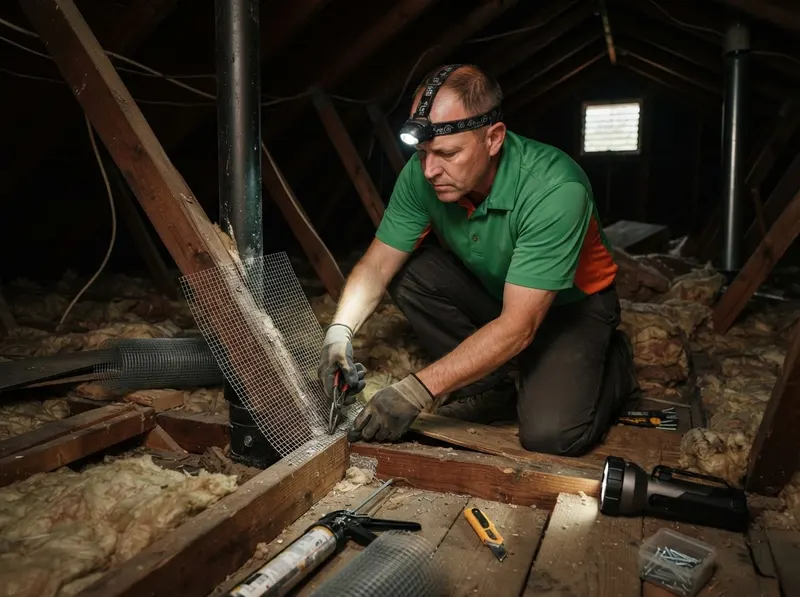
Roof rats (*Rattus rattus*) navigate elevated utility pathways and mature citrus trees, gaining fast structural access into Riverside residential soffits and fascia seams. In historic neighborhoods like Victoria and Magnolia Center, expansive wooden eave boards and California bungalow construction often settle over time, yielding half-inch gaps near plumbing vent stacks. Similarly, properties adjacent to the groves in Arlington Heights or steep arroyos in Canyon Crest see roof rats using climbing vines, Spanish clay roof tiles, and attic louvers to access indoor insulation. A quarter-inch gap grants entry to mice, while a half-inch breach accommodates an adult roof rat seeking nesting insulation and chewing along attic electrical runs.
Traditional extermination relies on bromadiolone or brodifacoum anticoagulant bait blocks deployed inside attic cavities. This approach carries severe trade-offs: poisoned rodents frequently die within interior drywall cavities, generating lingering odor issues that require wall removals, while dying rodents wandering into yards trigger fatal secondary toxicities in family pets and native red-tailed hawks. Non-toxic attic rodent exclusion removes poison exposure entirely. The protocol prioritizes structural hardware: sealing open eaves, ridgecaps, and roof-wall junctions with 23-gauge, 1/4-inch galvanized steel hardware cloth and expanding structural metal sealants. Trapping within the enclosed footprint relies strictly on humane mechanical snap boxes monitored until activity reaches absolute zero.
Structural execution follows three numbered phases to restore domestic security without chemical drift. First, technicians inspect the attic interior and roofline, mapping every active sebum rub-mark, chewed wire, and compromised eave screen. Second, the structural exterior envelope is permanently sealed using heavy-gauge mesh, custom metal flashing, and high-density polyurethane barrier compounds along roof dormers and weep holes. Third, internal mechanical stations isolate and extract residual rodents over several targeted visits, followed by a mist application of botanical-based bio-enzymatic deodorizers across contaminated cellulose, neutralizing pheromone trails that attract future colonies without leaving chemical residues.
Every job gets a firm, written price after a free on-site visit.
Tell us about your non-toxic attic rodent exclusion job in Riverside and we'll send a clear, written quote, usually the same day.
 SafeHome Pest Services