SafeHome Pest Services provides protective pest control service in Riverside designed around child and pet safety. Families seeking an established pest control service near me receive targeted mechanical exclusions and botanical perimeter barriers rather than aggressive indoor broadcast sprays.
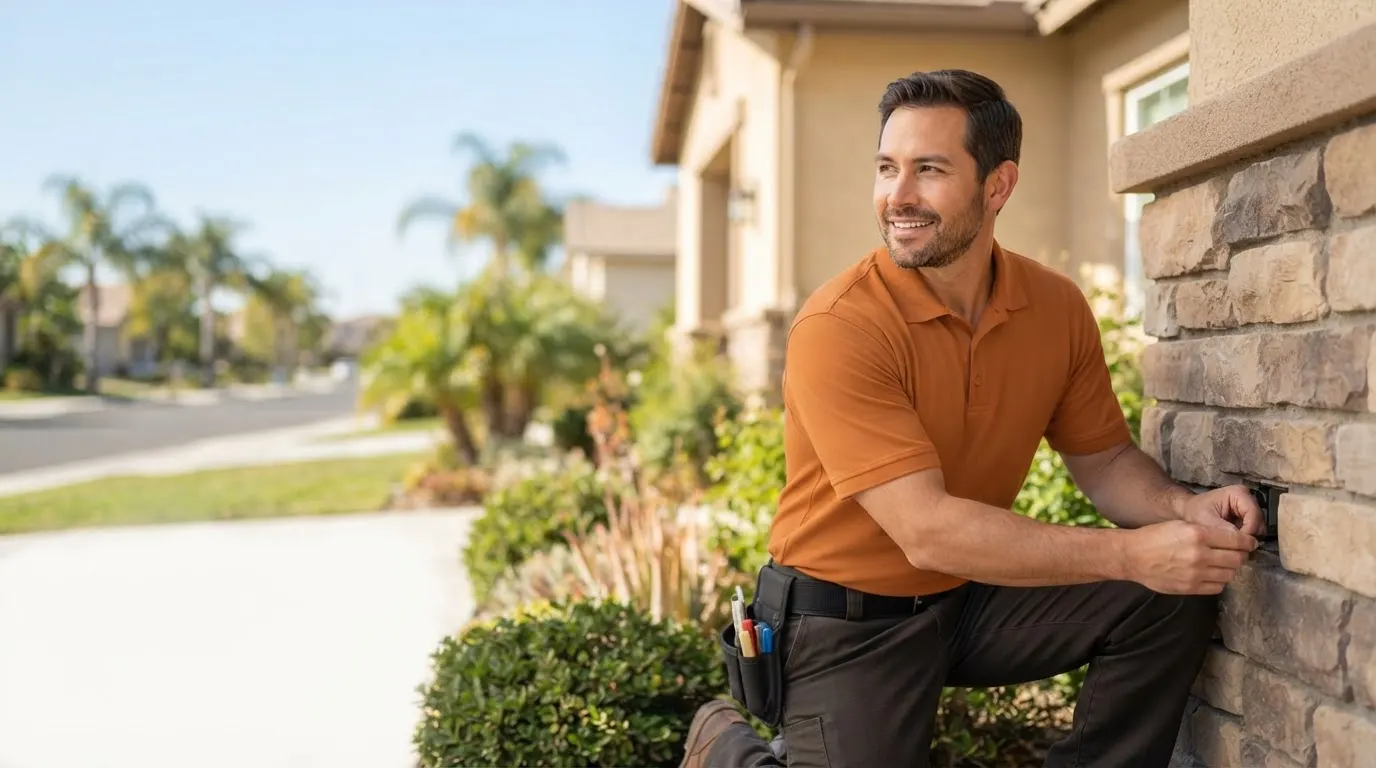
Pest control service in Riverside is an integrated structural management discipline that eliminates active insect or rodent colonies and seals exterior building perimeters across Riverside County properties without relying on hazardous indoor broadcast chemicals.
Every service reflects the same meticulous attention to detail, whether it's a single job or a larger pest control sevice project across Riverside.
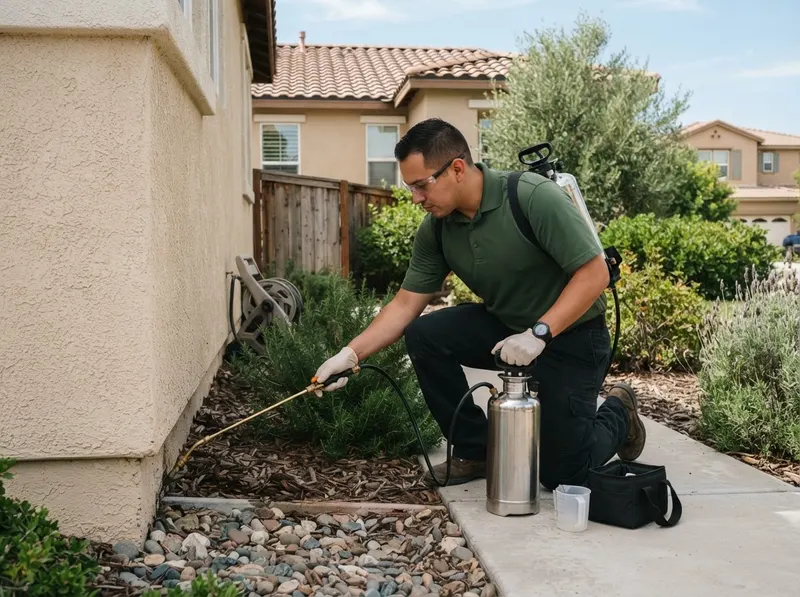
Suppresses multi-queen Argentine ant supercolonies common to Riverside clay soils using low-impact botanical repellent barriers applied along foundation stem walls and structural expansion joints. Argentine ants in Southern California do not operate out of isolated, single-queen nests; instead, they establish interconnected subterranean networks containing hundreds of fertile queens across adjacent residential parcels. Standard over-the-counter pyrethroid sprays cause these colonies to fracture into smaller satellite nests through a biological response known as budding, multiplying the number of indoor foraging trails behind kitchen cabinets and baseboards. SafeHome Pest Services applies micro-encapsulated essential botanical compounds, such as cedarwood oil, rosemary extract, and wintergreen, blended with non-repellent insect growth regulators directly onto vertical stem walls, weep screeds, window perimeters, and foundation plumbing penetrations. This dual-action barrier prevents structural invasion while permitting non-repellent transfer agents to pass silently among grooming worker ants, systematically halting reproductive egg production across subterranean nest chambers without emitting offensive petroleum solvent vapors into indoor living areas.
Get a quote →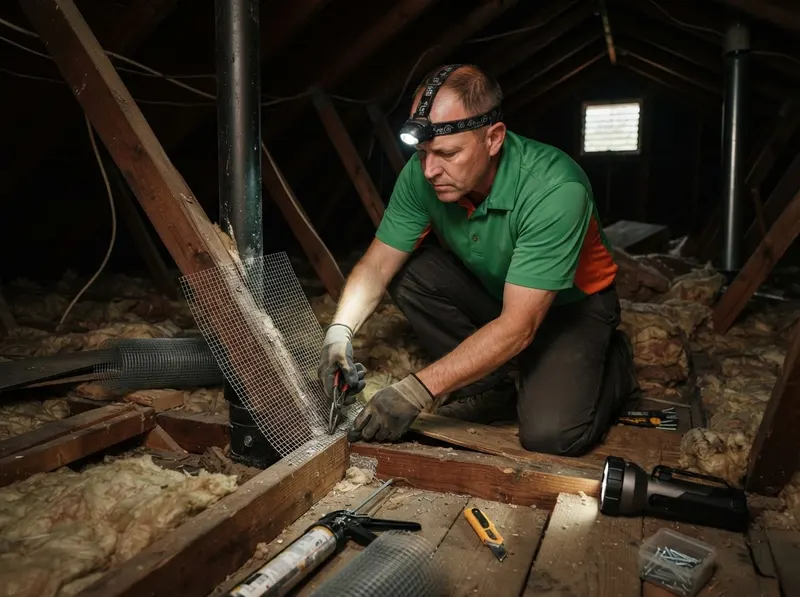
Clears roof rats and house mice from attic insulation using mechanical snap traps followed by 100% sealing of roof returns, fascia gaps, and crawlspace vents with 16-gauge quarter-inch wire mesh. Roof rats (Rattus rattus) exploit Riverside's mature tree canopy, overhead electrical drop lines, and clay tile roof architecture to access warm attic crawlspaces where blown-in cellulose and fiberglass insulation provide ideal nesting habitat. Rodents chew through protective electrical wiring sheathing, posing measurable residential fire hazards, while depositing airborne pathogen vectors including hantavirus precursors and salmonella bacteria across structural joists. SafeHome Pest Services strictly prohibits the use of indoor chemical rodenticides and loose anticoagulant tracking powders, which cause poisoned rodents to seek moisture and perish deep inside inaccessible interior wall cavities, resulting in foul biological decomposition odors and secondary infestations of carpet beetles, blowflies, and blowfly larvae. Our technicians install numbered, heavy-duty mechanical snap traps along high-activity runways, structural purlins, and wall plates. Simultaneously, our team repairs every structural penetration measuring larger than 0.25 inches using galvanized 16-gauge welded steel wire mesh, heavy-gauge steel kick plates, brass copper-mesh packing, and elastomeric structural sealants to construct an impenetrable physical boundary that permanently bars re-entry.
Get a quote →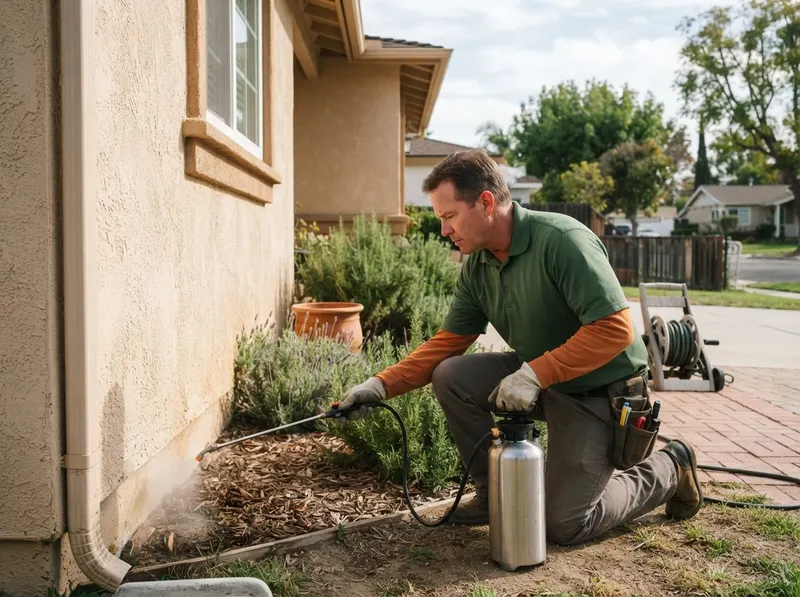
Removes webbing, egg sacs, and harborage grounds for Western black widows and brown widow spiders along patio covers, window frames, stucco weep screeds, and exterior storage perimeters. Riverside's dry inland climate and expansive concrete hardscapes foster high population densities of Western black widow spiders (Latrodectus hesperus) and invasive brown widow spiders (Latrodectus geometricus), both of which seek protected structural voids near outdoor lighting, hose bibs, children's play equipment, patio furniture, and pool equipment shelters. Black widow venom contains potent alpha-latrotoxin, presenting severe neurotoxic health risks to small domestic pets and young children. SafeHome Pest Services conducts comprehensive physical de-webbing utilizing specialized 24-foot carbon-fiber extension poles fitted with microfiber brushes, mechanically removing all structural web hammocks, mature spiders, and spiked or spherical silk egg sacs containing up to 900 viable spiderlings. Following mechanical de-webbing, technicians apply a non-systemic botanical perimeter barrier along sheltered recesses, exterior eaves, electric meter enclosures, and stucco expansion joints, eliminating secondary insect food sources and dissuading outdoor spider populations from spinning fresh web structures around living areas.
Get a quote →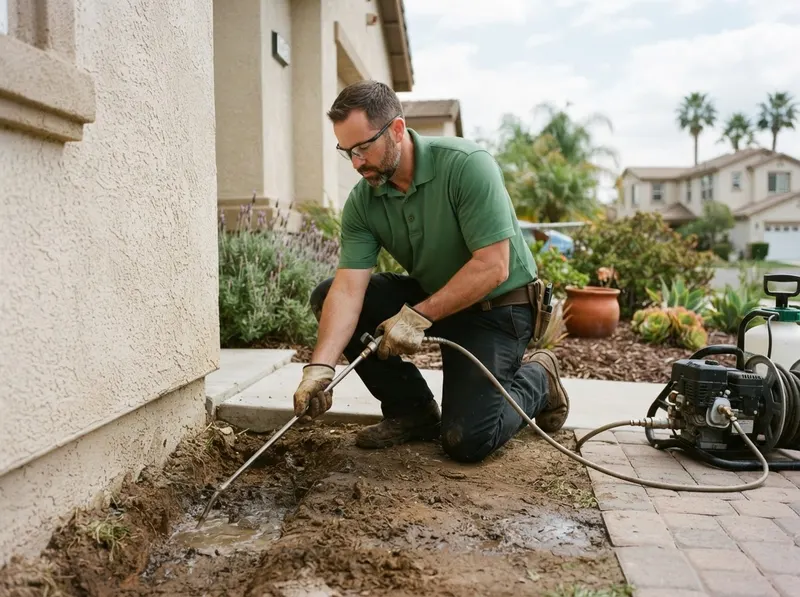
Establishes non-repellent liquid soil trenches around concrete foundations to disrupt subterranean worker termites traveling between ground moisture sources and structural floor framing. Subterranean termites (Reticulitermes hesperus) represent the primary wood-destroying organism threatening structural lumber across Riverside County, constructing mud shelter tubes over concrete stem walls and sub-slab cracks to maintain contact with subterranean ground moisture while feeding on structural sill plates, wall studs, and floor sub-assemblies. SafeHome Pest Services installs an unbroken liquid perimeter barrier by excavating continuous 6-inch-wide by 6-inch-deep soil trenches immediately adjacent to exterior foundation walls and deep-injecting non-repellent liquid termiticides down to the top of structural footings. Because the formula remains undetectable to foraging subterranean termites, worker insects pass directly through the treated soil matrix, transferring the active non-repellent compound back to central subterranean reproductive brood chambers through regular social grooming (trophallaxis). Subterranean colonies collapse systematically over 60 to 90 days, completely protecting the structural wood components of the home without requiring invasive structural drilling through interior hardwood flooring or disrupting internal finished living areas.
Get a quote →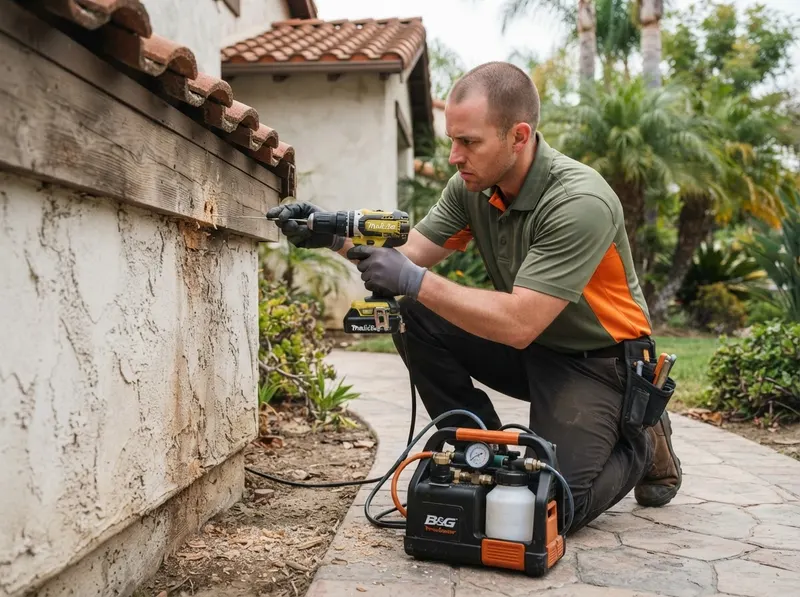
Eliminates isolated drywood termite colonies inside structural rafters, door jambs, and window casings through direct low-toxicity precision wood injections without fumigation displacement. Drywood termites (Incisitermes minor) do not maintain contact with soil moisture; instead, reproductive winged alates swarm during warm, arid late summer afternoons and Santa Ana wind conditions, penetrating exposed wood joints, rafter tails, attic vents, and window jambs. Once established within solid wood framing, drywood colonies bore expansive feeding galleries, leaving behind characteristic hexagonal fecal pellets (frass) that spill onto window sills and floor surfaces. SafeHome Pest Services inspects wood assemblies using advanced high-resolution acoustic listening sensors and moisture-gradient meters to pinpoint active gallery centers. Technicians drill miniature 0.125-inch inspection ports directly into confirmed structural gallery voids, delivering precise micro-injections of low-toxicity botanical or mineral-based termiticides directly into the insect feeding chambers. The solution expands throughout the localized gallery matrix, eliminating both workers and reproductive nymphs immediately on contact without forcing families, pets, and perishable foodstuffs to vacate the home for multi-day structural sulfuryl fluoride gas fumigation.
Get a quote →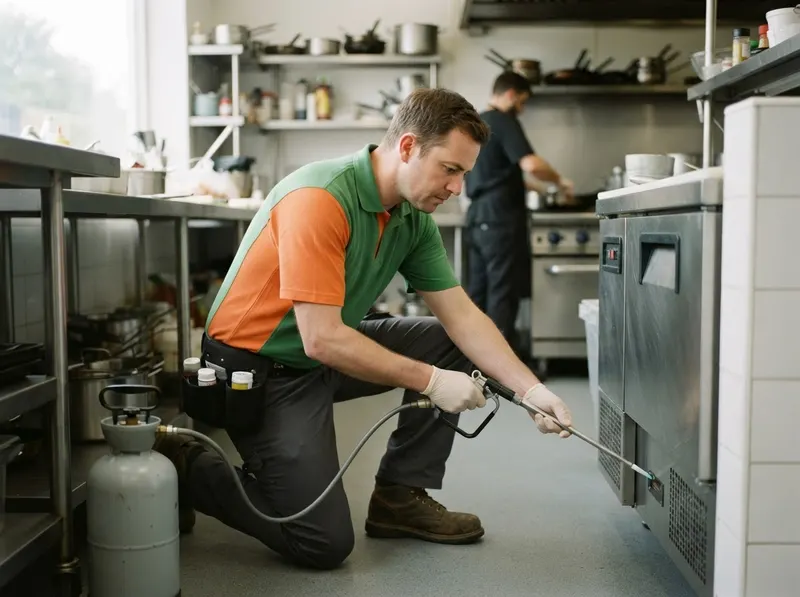
Cleans out German cockroach populations in food preparation environments using target-specific insect growth regulators, precision crack-and-crevice bait gels, and physical sanitation plans. German cockroaches (Blattella germanica) reproduce rapidly in commercial kitchens, bakeries, and residential cooking environments across Riverside, exploiting high-moisture motor housings, commercial dishwashers, beverage dispenser lines, and stainless steel prep table joints. Each female egg capsule (ootheca) yields 30 to 48 nymphs every 28 days, creating acute sanitation violations, transmitting pathogenic enteric bacteria like E. coli, and triggering severe asthma symptoms through shed cast skins. SafeHome Pest Services deploys an intensive four-phase elimination program that avoids airborne chemical fogging over food-contact surfaces. Our technicians place non-repellent, high-palatability gel baits within deep structural cracks, motor housings, and cabinetry hinges, combining bait placements with target-specific insect growth regulators that disrupt chitin synthesis and permanently sterilize developing nymphs. Technicians also provide detailed sanitation correction logs to kitchen managers, eliminating organic grease films and sealing plumbing pipe penetrations to ensure structural premises remain fully code-compliant with Riverside County Department of Environmental Health standards.
Get a quote →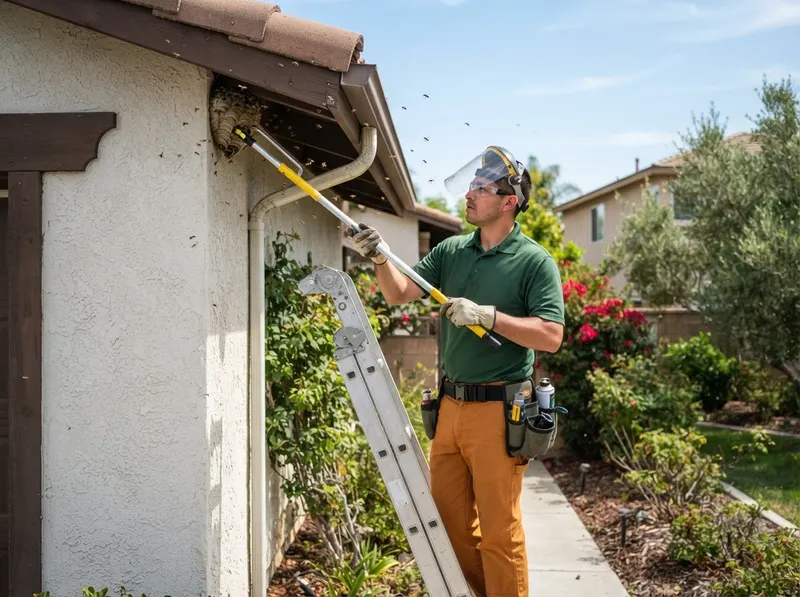
Safely knocks down aggressive paper wasp and yellow jacket nests from exterior eaves, balcony rafters, and outdoor structural fixtures using targeted botanical freeze sprays. Western yellowjackets (Vespula pensylvanica) and common paper wasps (Polistes dominula) establish architectural colonies along exterior rain gutters, patio cover rafters, decorative wood corbels, and underground landscape cavities across Riverside properties throughout hot summer months. Aggressive worker wasps defend nesting territory through repeated stings that inject melittin peptides, causing severe localized swelling and potentially life-threatening anaphylactic shock in sensitized individuals. SafeHome Pest Services neutralizes overhead nests using precision-directed botanical aerosol sprays derived from natural pyrethrins and botanical oils, dropping airborne guard wasps instantly through physical temperature reduction and rapid neuromuscular knockdown. Technicians physically scrape away the structural nesting combs, discard all biological residues, and coat the mounting substrate with an aromatic botanical repellent that prevents queen wasps from re-anchoring secondary paper comb nests in that architectural pocket for the remainder of the active seasonal breeding cycle.
Get a quote →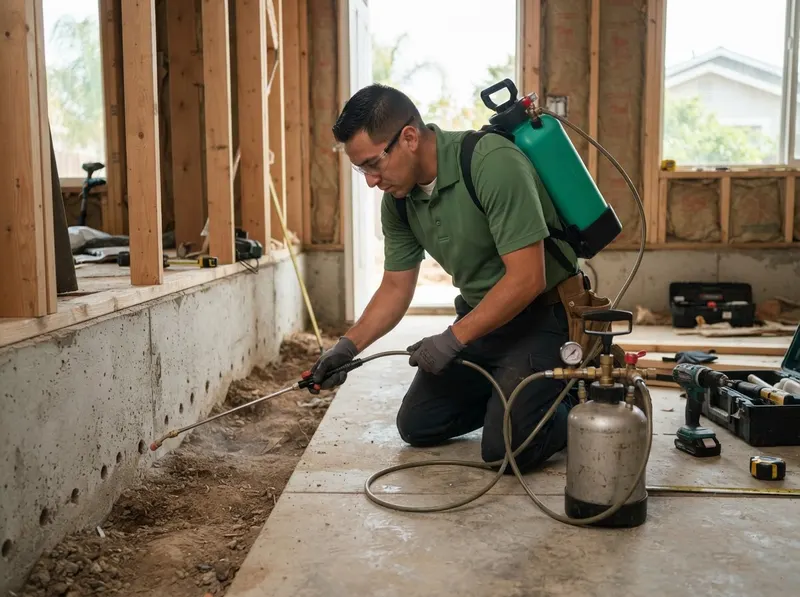
Targets earwigs, silverfish, and field crickets clustering inside perimeter mulch beds and foundation weep screeds through targeted micro-encapsulated granules that resist heat degradation. Riverside's intense solar exposure and prolonged heat dry out landscape soil, driving moisture-dependent pests like European earwigs (Forficula auricularia), silverfish (Lepisma saccharinum), and field crickets (Gryllus) into the sheltered void behind stucco weep screeds, crawlspace vents, and foundation expansion joints. These pests consume paper insulation backing, textile fibers, and decorative vegetation before migrating under sliding glass door tracks into ground-floor living spaces. SafeHome Pest Services installs an exterior sub-screed defense line utilizing micro-encapsulated mineral granules and natural diatomaceous earth compounds engineered to resist degradation caused by high ultraviolet index levels and automated landscape drip irrigation. Granules settle deep into decorative rock beds, decomposing bark mulch, and exterior stucco drainage tracks, rupturing the protective waxy exoskeleton of crawling perimeter insects on contact and dehydrating foraging populations before they can breach entry thresholds or ascend structural interior walls.
Get a quote →You get a firm, itemized quote for your pest control sevice before any work begins, no surprises, no pressure.
Careful prep, tidy work, and a full cleanup when we are done. We treat your home and belongings like our own.
The same trusted, background-checked team from the first call to the final check.
If your home faces recurring lines of Argentine ants or exterior perimeter black widows, select a quarterly botanical perimeter barrier service. If you hear scratching inside walls or locate chewed electrical cabling in your attic space, select a dedicated rodent trapping and mechanical exclusion service. 25 inches with metal flashing, mortar, and copper mesh, requiring zero ongoing chemical application but involving higher upfront fabrication time.
If your property displays drywood termite frass along interior window sills, select targeted localized micro-injections; if subterranean mud tubes ascend exterior foundation concrete from high-moisture clay soil, select non-repellent perimeter soil trenched barriers. The trade-off is structural access versus subterranean depth: localized wood injections treat accessible lumber framing immediately without moving families out of the house, whereas subterranean trenching isolates sub-slab colonies moving upward from ground moisture around irrigation lines. If American cockroaches or oriental water bugs surge up from bathroom drains and perimeter floor sinks during seasonal heat waves, select an insect growth regulator crack-and-crevice regimen paired with sub-screed foundation applications.
If roof rats forage across mature citrus trees or climb architectural stucco arches, choose roofline steel flashing coupled with exterior tamper-resistant mechanical bait stations rather than broadcast repellents. The trade-off is architectural modification versus recurring monitoring: mechanical hardware installation requires physical alteration of trim joints, fascia returns, and roof ridge caps, whereas station maintenance requires scheduled inspections every 30 to 60 days to replenish non-volatile monitoring blocks and clear caught rodents before decomposition begins. If paper wasps colonize exterior second-story eaves, select direct botanical freeze sprays; if subterranean yellowjackets construct subterranean mud cavities in landscaping, select direct soil dusting.
The trade-off is nest visibility versus subterranean excavation complexity: aerial knockdown resolves immediate stinging hazards within 15 minutes without residual soil disruption, whereas subterranean yellowjacket elimination requires protective ground excavation and targeted root-zone soil void treatments to prevent surviving worker wasps from tunneling alternate exit pathways into nearby walkways or play areas.
Every project gets a firm, written price after a free on-site visit. Ranges below for orientation.
Tell us about your pest control sevice job and we'll send a clear, written quote, usually the same day. Or just call and talk to a real Riverside pro.
(951) 814-2917
Properties situated near historic agricultural citrus groves along Arlington Heights, Victoria Avenue, and the steep, rocky hillside terrain framing Mount Rubidoux encounter sustained pest pressure from roof rats seeking fruit nectar, fallen citrus, and agricultural irrigation conduits. In elevated residential tracts such as Canyon Crest, Hawarden Hills, and Mission Grove, decomposed granite formations, extensive dry arroyos, and dense ornamental landscaping shelter expansive Argentine ant supercolonies that rapidly migrate indoors through exterior stucco weep screeds during intense dry Santa Ana wind conditions and prolonged triple-digit summer heat waves. SafeHome Pest Services uses physical exclusion barriers along structural foundations, roofline returns, and foundation weep screeds to prevent seasonal entry without introducing volatile organic chemical odors, hazardous synthetic pyrethroids, or industrial neurotoxins into Riverside living spaces. Homes located throughout older architectural corridors in Downtown Riverside and Magnolia Center frequently feature classic raised-foundation crawlspaces and historic framing lumber that require careful subterranean termite perimeter monitoring and precision localized drywood spot applications. By accounting for the distinct soil dynamics along the Santa Ana River basin and the specific microclimates of the Inland Empire, our team tailors every structural protective barrier to defend local families against persistent desert-fringe pest intrusions while keeping domestic living environments completely free from airborne chemical residues.
Free estimates for Riverside & the surrounding area.
 SafeHome Pest Services